

Streams: In Dreams with Satoshi Kon
Revisit the Surrealist Anime Master that inspired Inception.

In the last finished short film Ohayō (Good Morning, 2008) before his untimely death in 2010, Satoshi Kon comes full circle in reference to his earlier works. A closer look reveals some of the essential recurring themes throughout his films: Blurred layers of reality and imagination, dream logic, transitory states, memory and media recordings, (male) voyeurism and archetypical female anime characters. In the one minute runtime of Ohayō, visual storytelling reigns, words are unnecessary. When a girl wakes up in her messy apartment after a birthday party, her liminal state is visualized with a simple editing trick that splits the character in two. The result is tinged in the twilight of (perfect) blue, as multiple ghostly versions of the protagonist engage in delayed versions of her morning routine. Her fragmented self finally becomes whole when she steps in front of the mirror: “Ohayō!”—Good morning, she says into the camera, as her half transparent layers bloom into full color. By addressing us viewers, Kon reminds us that we are incorporated in the cinematic relationship with his characters.
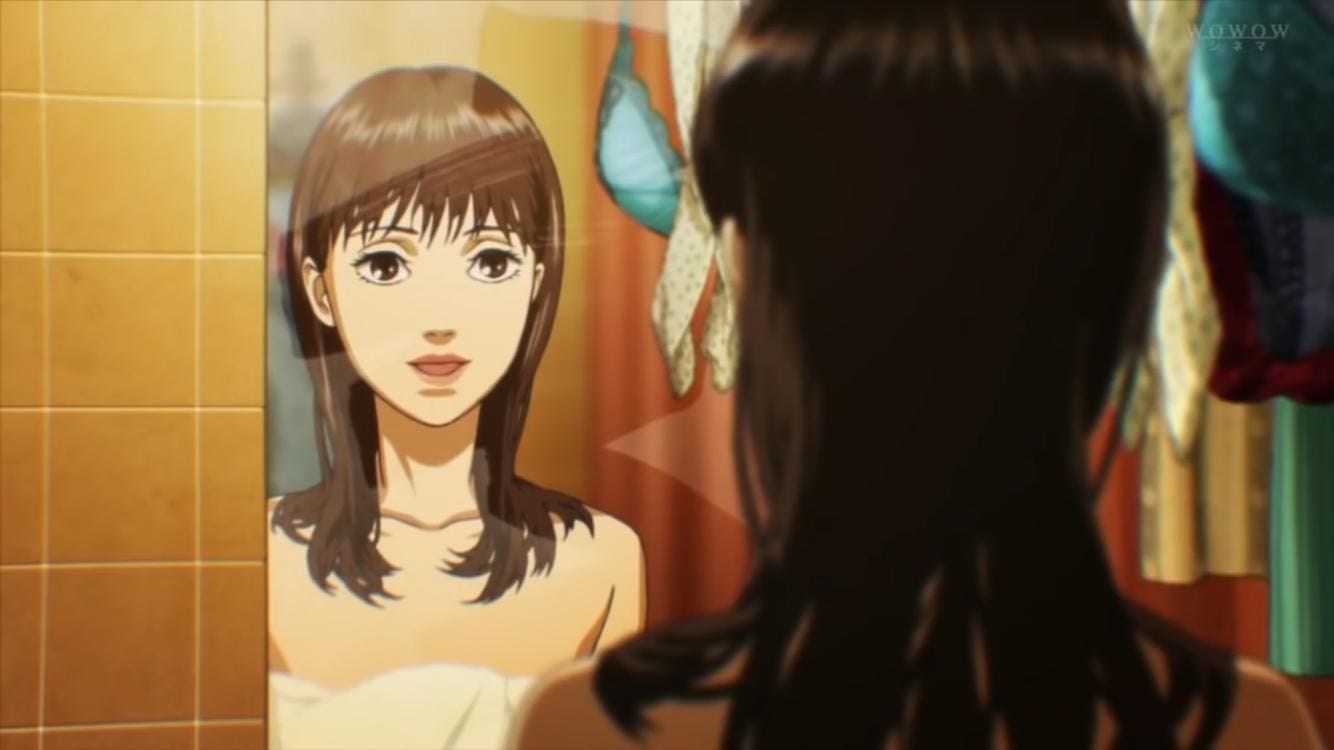
Ohayō’s protagonist could as well be Mima, the main character from Perfect Blue (1996)—Kons directorial debut—as her two personas merge in front of the mirror before she tackles another day on set. Kon once said about his (female) characters that they are fictional constructs and therefore don’t exist in reality; as such, his characters may even be aware of their artificiality. If this is the case, it usually results in fractioned personas, identity crises, and schizophrenic tendencies in his stories.
Ohayō makes the state between the unconscious and conscious visible without any narrative explanation. Its minimalism and audiovisual build-up to the climax in front of the mirror, turns the mundane nature of the morning ritual into something more essential, more important. How do we start our day? Fragmented and removed, on autopilot and anxious, or determined and intentional? There is something intriguing and beautiful about transitory mental states; the surrealists started to write them down, Satoshi Kon animated them. Ohayō!
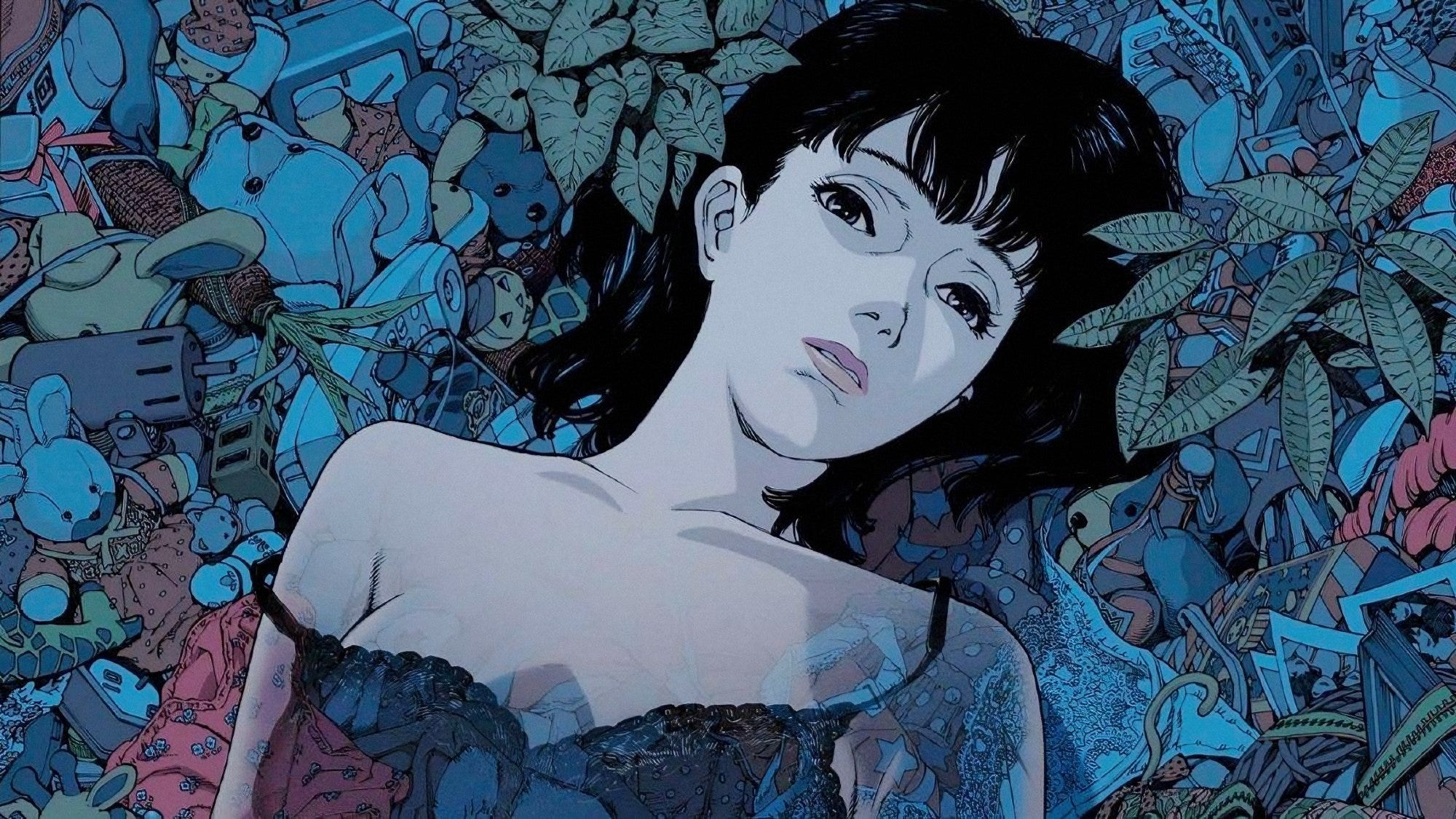
It’s no surprise that I was unconsciously drawn to Satoshi Kon’s works for a while, given the shared obsession with blurred layers of reality, imagination, cinema and the dreamworld. Widely established beyond only anime lovers at this point, Kon’s films became acclaimed for their disorienting narratives that question reality while fusing psychological depth with social and technological issues. Relatable in 2026 for sure. Darren Aronofsky and Christopher Nolan are said to be inspired by his work and it makes sense why western filmmakers would look into Satoshi’s world, as the imagination has no limits there. I’m by no means an anime expert, but as mentioned elsewhere, the Japanese tradition of filmmaking left a particular mark on me. Japanese Anime classics as Akira (1988) and Ghost in the Shell (1995) opened my eyes to the possibilities of animation beyond the biased assumption of being entertainment for kids only.
Madhouse, the animation studio behind Satoshi Kon’s films, is one of Japan’s most respected anime production houses. Founded in 1972 by former Mushi Production animators including Masao Maruyama, it built a reputation for high-quality, ambitious projects ranging from experimental films to popular series. Madhouse played a crucial role in Kon’s career, producing three of his major features—Perfect Blue, Tokyo Godfathers, and Paprika—and allowing him significant creative freedom.
Satoshi Kon frequently drew from existing literary and cinematic sources. Perfect Blue was adapted from Yoshikazu Takeuchi’s 1991 novel of the same name. Tokyo Godfathers took loose inspiration from John Ford’s 1948 Western 3 Godfathers, reimagining a Christmas story in contemporary Tokyo with homeless protagonists. Paprika is based on Yasutaka Tsutsui’s 1993 science-fiction novel, which Kon expanded into a visually dazzling exploration of dreams and reality.
The following is a list and short commentary of his features as writer / director. Scroll to the bottom for the short list with film info. For streaming options, please have a look online.
Magnetic Rose (as Writer) - Segment in Memories (1996) (Directed by Katsuhiro Otomo)
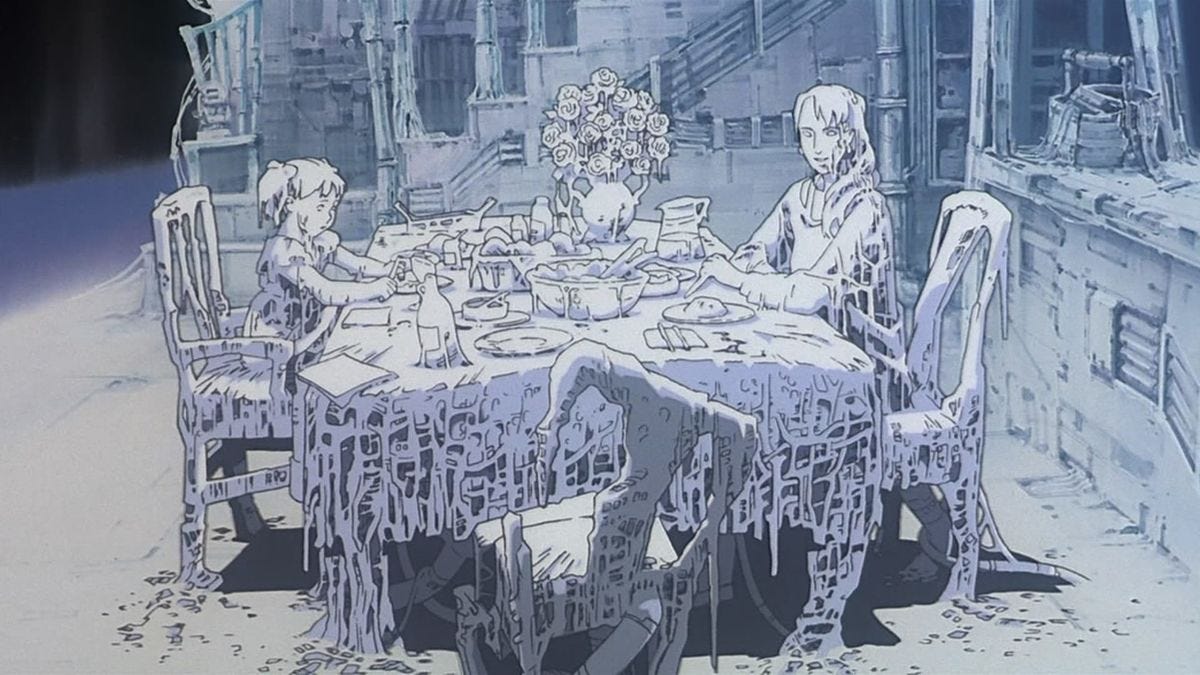
Even though Kon did not direct this ca. 50 minute segment of an anthology feature called Memories, this sci-fi short is significant as it has Kon’s handwriting all over it. People familiar with the sci-fi canon may recognize similarities to Solaris, 2001, and La Jetée (for more sci-fi streams click here).
In the distant future, a space crew receives an emergency signal from what looks like a rose shaped structure floating in a magnetic field in outer space. When two of the four crew members set out to investigate the signal and enter the structure, they encounter a lost palace seemingly built for a long forgotten opera diva. A recurring serenade from Puccini’s Madama Butterfly is the fatal siren song luring the explorers deeper into a world of illusions based on long lost memories.
Perfect Blue (1997)
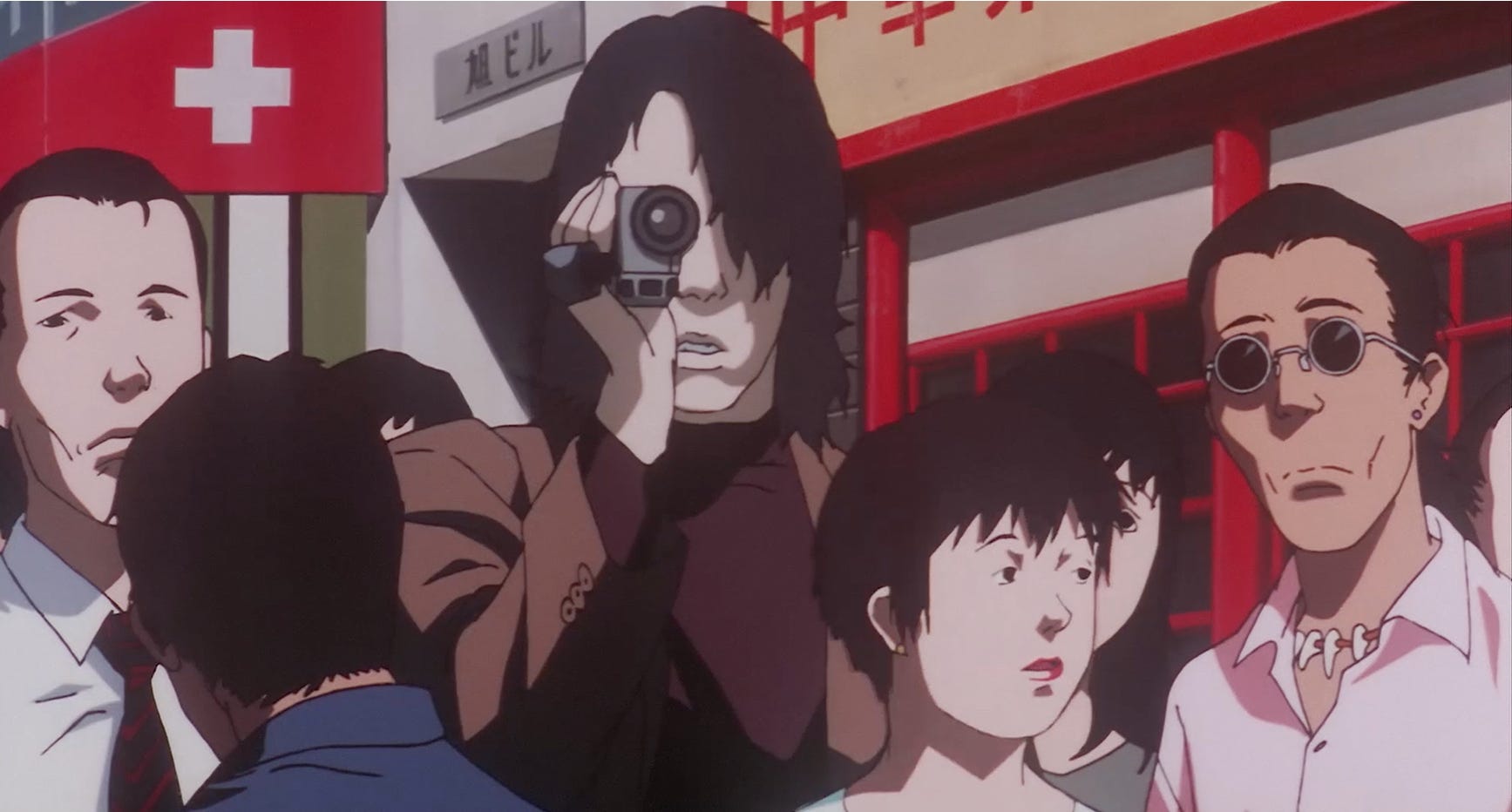
Call it synchronicity or randomness, Perfect Blue was a film that I encountered again and again over the years when researching for movies. If you’re curious about the liminal spaces between fantasy and reality, there’s no way past Perfect Blue. A good entry point that incorporates all of Kon’s recurring themes in a genre thriller that keeps you on your toes with some disturbing scenes.
Rising pop idol Mima Kirigoe retires from her girl group to pursue an acting career, only to face an obsessive stalker, brutal murders in her vicinity, and an increasingly fracturing sense of reality as her past persona haunts her in a descent into paranoia and identity crisis. This was Kon’s directorial debut, produced by Madhouse and originally planned as a live-action film before funding issues shifted it to anime. Adapted from Yoshikazu Takeuchi’s novel, with a screenplay by Sadayuki Murai and Kon.
Millennium Actress (2001)
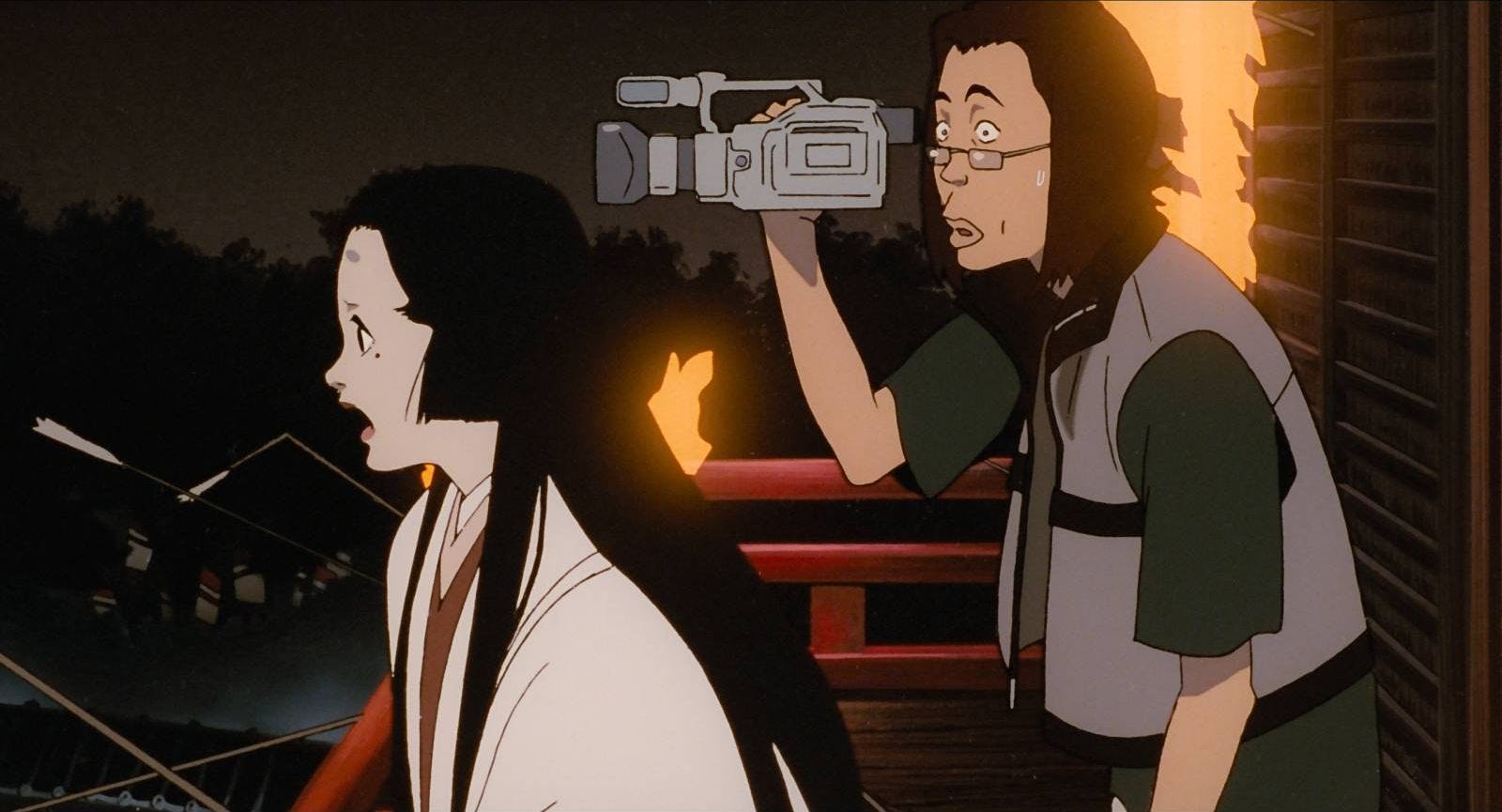
Millenium Actress is a layered story about an aging actress reflecting on her past life on screen, blurring the lines between memory and recordings. After a big film production studio is shut down and razed, a documentary filmmaker and his camera assistant (Kon’s cameo?) have a rare appointment with the title giving Millennium Actress. The assignment to revisit the most important stops in her career in an interview turns out to be only one side of the narrative. When the director gives her a long lost key, a different strain of narrative from her memory begins and reveals the real motivation behind her acting career. An ode to the infinite pull of unfulfilled love and the solace of malleable memories. (Sunset Boulevard and Inland Empire may be distant relatives from Hollywood).
Tokyo Godfathers (2003)
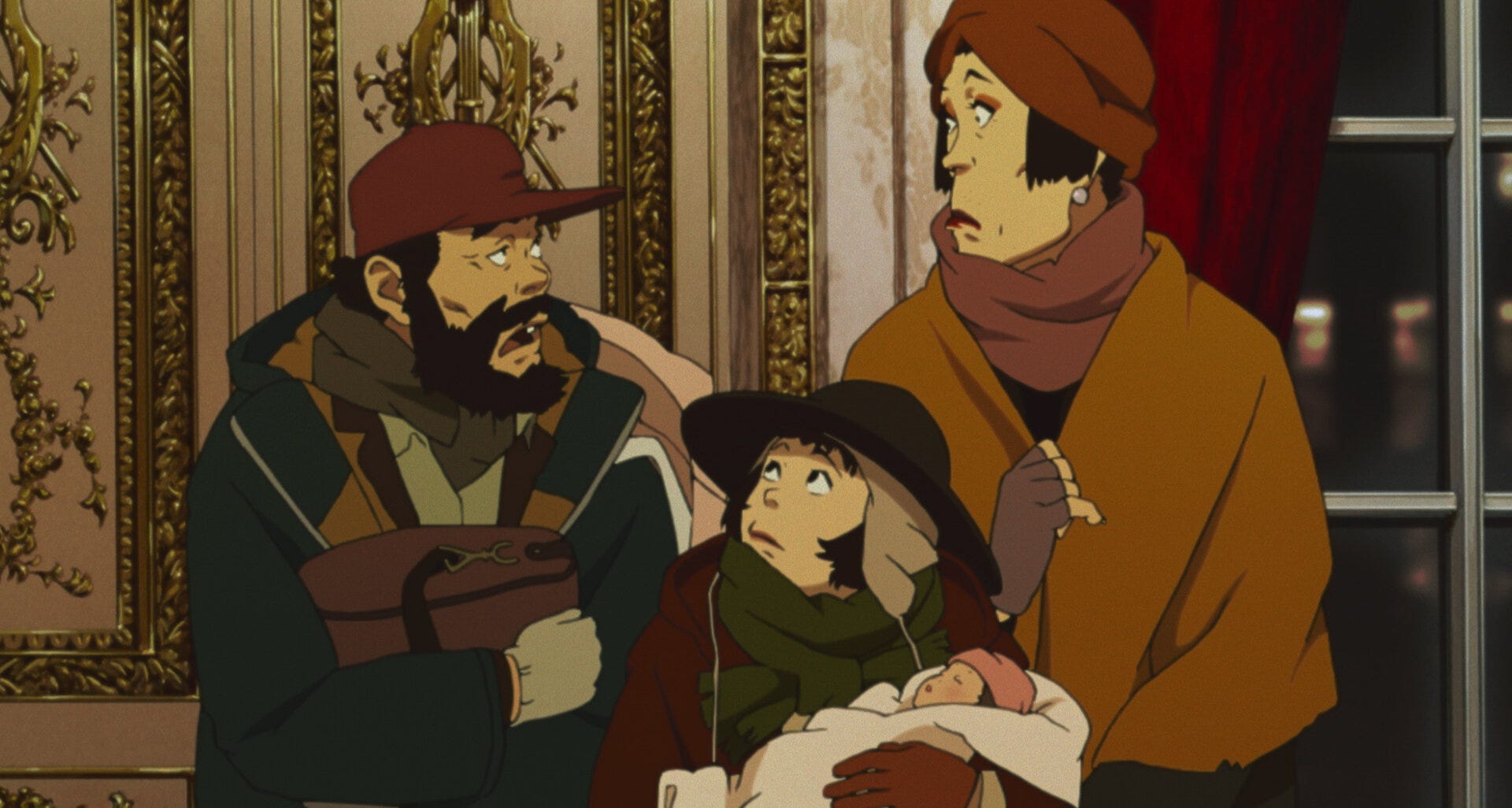
The usual surrealist dance is less obvious in Tokyo Godfathers, probably his most straight forward film. On Christmas Eve in Tokyo, three homeless strangers—an alcoholic ex-bicyclist Gin, a flamboyant former drag queen Hana, and a teenage runaway Miyuki—discover an abandoned newborn baby in the trash and embark on a chaotic, heartfelt quest across the city to locate its parents, finding unexpected redemption along the way. Directed and co-written by Kon, it stands out as his more realistic, character-driven, and grounded work.
Paprika (2006)
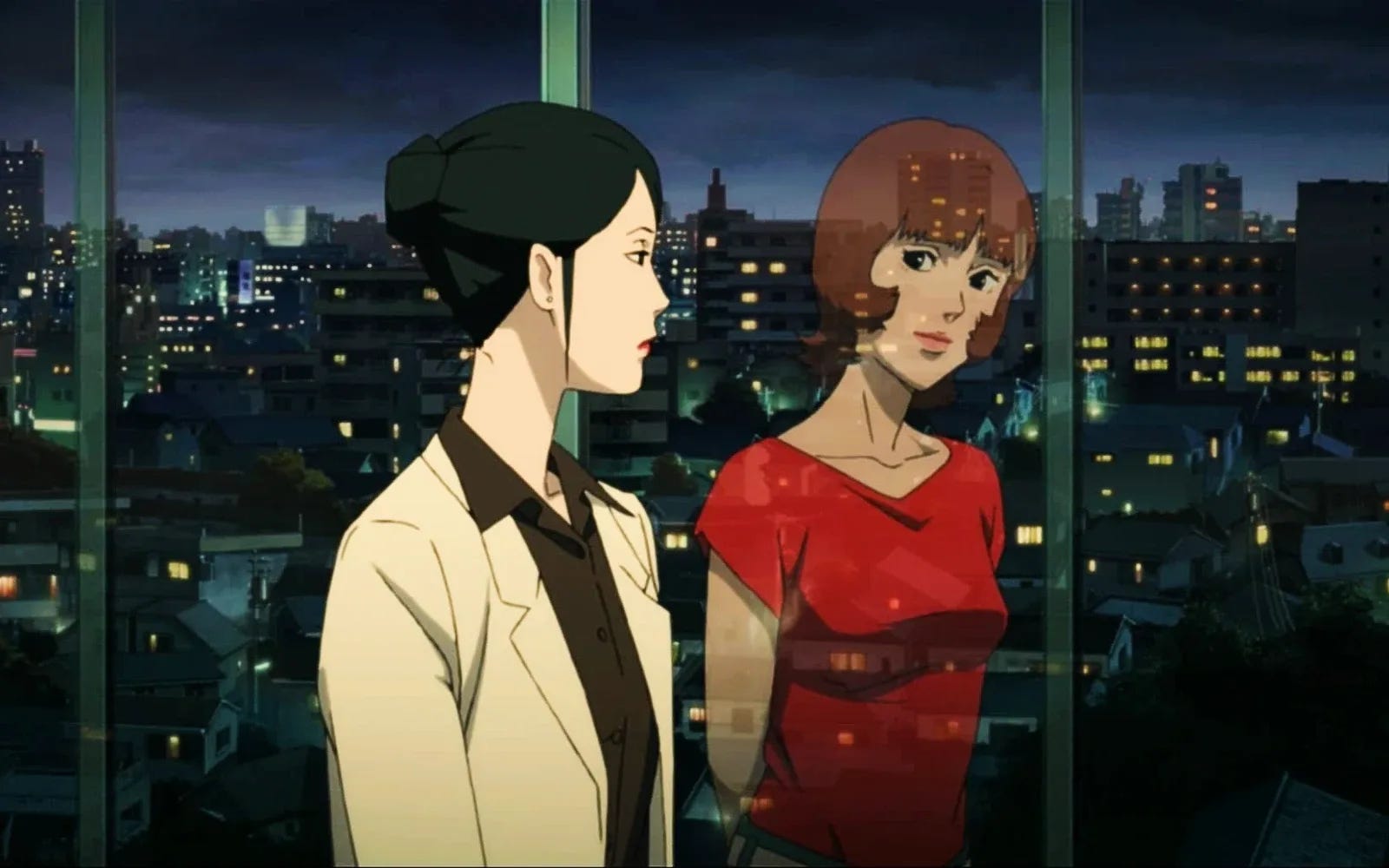
In Paprika—the film that is said to have inspired Inception—Kon comes back to surrealist shapeshifting form. Paprika blends animated dreamworlds and layered levels of dream narratives in an ultimate standoff between reality and collective unconsciousness. Beware of the dream parade, it may stick with you in some way or another… (That recurring musical theme!)
Therapist Dr. Atsuko Chiba uses the experimental DC Mini device to enter patients’ dreams as her vibrant alter ego “Paprika,” but when the tech is stolen, dreams invade reality, unleashing surreal chaos and forcing her to battle a dream terrorist to prevent widespread psychological collapse. This is Kon’s final completed feature, co-written by Kon and Seishi Minakami, with music by Susumu Hirasawa. The ambitious production (budget around 300 million yen) took about 2.5 years and is celebrated for its mind-bending visuals and influence.
Film list and details:
Magnetic Rose (彼女の想いで / Kanojo no Omoide, from Memories anthology, Japan, 1995) (Kōji Morimoto) (45 min) (Magnetic Rose)
(Satoshi Kon – screenwriter)
Cast: Tsutomu Isobe (Heinz), Kōichi Yamadera (Miguel), Shōzō Iizuka (Robot)
Perfect Blue (パーフェクトブルー, Japan, 1997) (Satoshi Kon) (81 min)
Cast: Junko Iwao (Mima Kirigoe), Rica Matsumoto (Rumi), Shiho Niiyama (Rei), Masaaki Okura (Mamoru Uchida), Shinpachi Tsuji (Tadokoro)
Millennium Actress (千年女優, Japan, 2001) (Satoshi Kon) (87 min)
Cast: Miyoko Shōji (Chiyoko Fujiwara, elderly), Mami Koyama (Chiyoko Fujiwara, adult), Fumiko Orikasa (Chiyoko Fujiwara, young), Shōzō Iizuka (Genya Tachibana), Kōichi Yamadera (Kyoji Ida)
Tokyo Godfathers (東京ゴッドファーザーズ, Japan, 2003) (Satoshi Kon) (92 min)
Cast: Tōru Emori (Gin), Yoshiaki Umegaki (Hana), Aya Okamoto (Miyuki), Satomi Kōrogi (Kiyoko, the baby)
Paprika (パプリカ, Japan, 2006) (Satoshi Kon) (90 min)
Cast: Megumi Hayashibara (Paprika / Atsuko Chiba), Tōru Emori (Seijirō Inui), Katsunosuke Hori (Toratarō Shima), Tōru Furuya (Kōsaku Tokita), Kōichi Yamadera (Morio Osanai)
Bonus:
Paranoia Agent (パラノイアエージェント, Japan, 2004) (Satoshi Kon) (13 episodes, ~25 min each) - limited TV Series (LINK)
Cast: (ensemble, key voices include) Mamiko Noto (Tsukiko Sagi), Shōzō Iizuka (various), multiple rotating cast across episodes
Ohayō (Good Morning, Japan, 2008) (Satoshi Kon) (1 min) - Short (LINK)
The Dream Machine (2010) - unfinished