

Streams: The Future is Present
A curated list of Science-Fiction classics in the age of AI. With introducing thoughts.

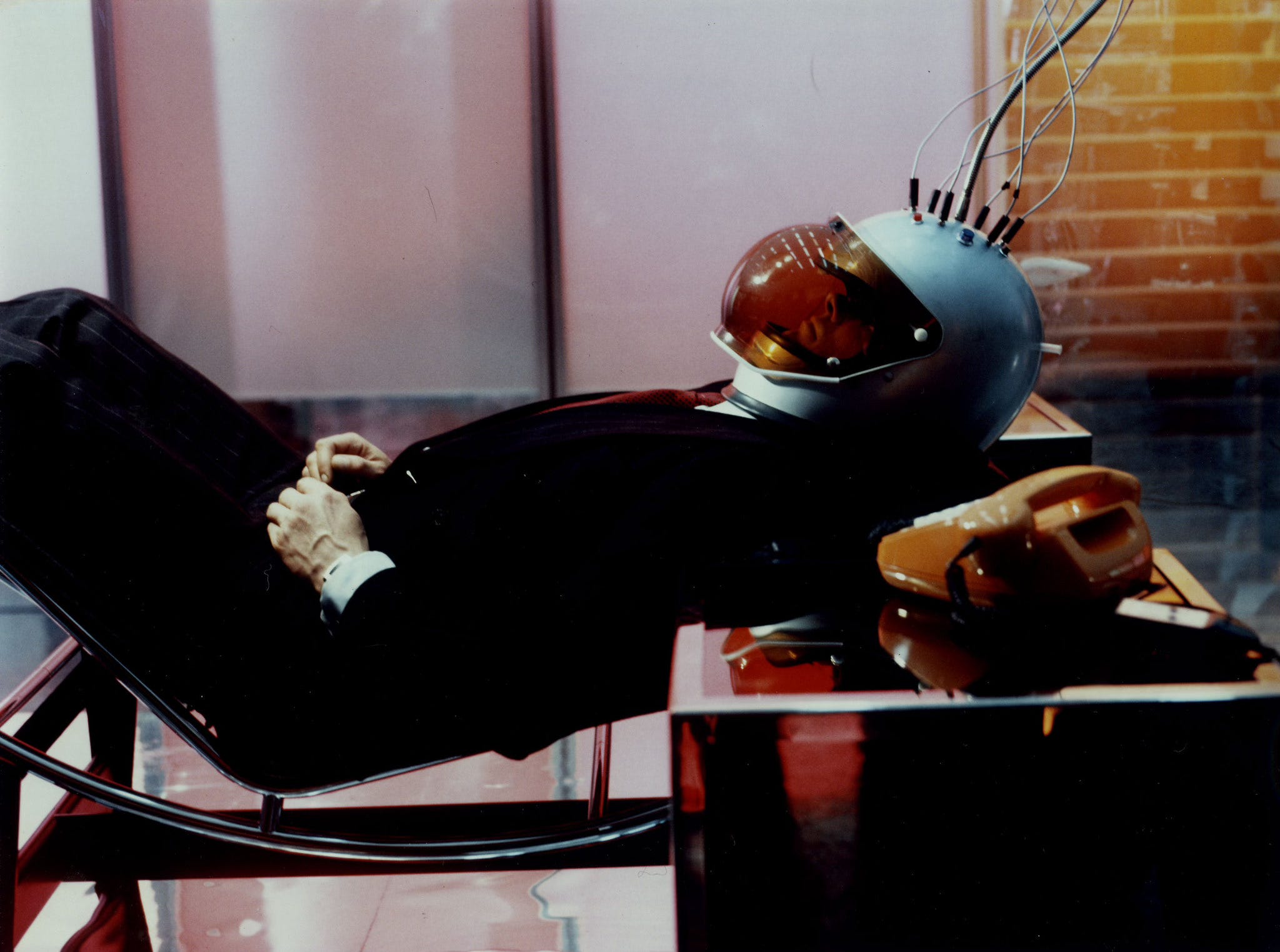
Given the constant barrage of all things AI, it’s difficult to ignore the impression that this technological revolution is imposed from the top down. Markets are fully committed, fueling the race for rare-earth minerals and sprawling data centers, surveillance is the built-in byproduct, but what do we have to hide anyways, right? In a time in which we are even going to the moon again, current hype scenarios feel eerily familiar from earlier books and films. Indeed, our cultural science-fiction archive grew quite large over the years and big tech makes no secret about taking inspiration from writers like Neil Stephenson, Philip K. Dick or Douglas Adams. While few tech evangelists still nurture noble goals, recent behavior from tech giants points far more toward control than salvation. Which one is it? Do no harm or divide and conquer?
Beyond the frothy optimism of the tech-finance bubble; fear, uncertainty, and doubt (FUD) rule the day. Social norms are falling apart, conflicts simmer consistently, jobs feel precarious, and common reality itself seems fractured. Can we still truly listen and talk to one another or have we already entered the fiction of The Matrix and The Terminator? In a world where online and offline bleed together, we must ask ourselves how deeply our imaginations have been colonized by mediated and increasingly synthetic imagery. What happens to our imagination when everything is mediated 24/7?
Fears of (tech) innovation are as old as the inventions themselves, and still, the Boomer-versus-Doomer binary persists, keeping the public discourse at bay with dogmatic choices between good and evil. Are we gradually adapting to think like computers? Machines like to think in binaries, yet what sets us apart as humans is our capacity for nuance and paradox. We should make use of it as long as we still can, as the future is present: virtual reality, computer simulations, deepfakes, meme wars, and artificial intelligence are here to stay and confuse our perception of what we thought was real. Opinions are shaped in endless feeds of perpetual Future Shock. The resulting emotional anxiety breeds drug use and tech dependency in a vicious cycle.
Are we running towards dystopia or utopia at last? Surely the arrival of the Singularity depends on how (much) we use and become used to certain tech in our daily lives. After all, it is us who improve AI models through reinforcement learning while also paying subscription fees (a business model that is as devious as it is genius). The still young history of social media showed us how influential feeds on screens can be. Repetitive attention can (in)form habits. Are we still acting with our own intention?

As we struggle to reclaim our attention from algorithmic dopamine loops, a good film can still shift perspectives, if we have the patience to let it. AI videos of cat kung-fu on TikTok or two hours of Bruce Lee? Recent reports on our decreasing attention span are not encouraging: Matt Damon revealed to Joe Rogan how Netflix dumbs down scripts for scrolling audiences (are you double screening?), while an Atlantic article noted that film students were unable to endure screenings without reaching for their phones. It’s almost as if the device has become the remote control. Time is precious, but we always have a choice. Who’s in charge?
In an era when transhumanist ideals align with political agendas and surveillance has become accepted for the sake of convenience, many earlier sci-fi works feel prophetic today. Since its earliest iterations, science fiction has commented on present conditions by exaggerating technological possibilities in the fictional realm. When imagination has no limits, innovation may follow, but ignoring potential consequences means facing them when it might be too late.
The following is a personal selection of sci-fi favorites from film history, offering a starting point for the ongoing conversation about technology’s promises and perils.
Film details and selection list at the bottom of the page. Please have a look online for current streaming options.
Metropolis (1927) / Woman in the Moon (Frau im Mond, 1929), Germany, Fritz Lang
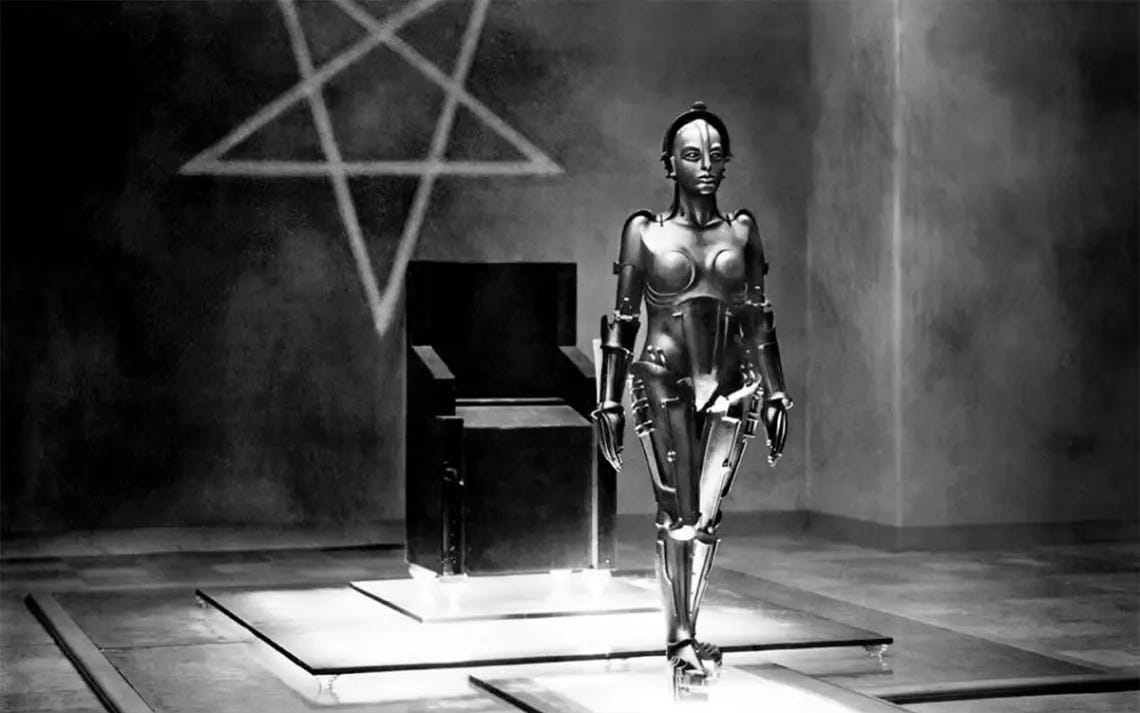
Two early silent sci-fi masterpieces from Fritz Lang open the series. Metropolis, now approaching its centennial, gave us flying cars, a mad German scientist, and the robotic Maria; a technological Eve we still await. It’s one of cinema’s most influential works and its themes of division and empathy feel as urgent today as in 1927. The heartfelt call for the heart to mediate between the mind and our hands may sound cheesy today, yet it seems we still haven’t fully absorbed it.
On the B-Side, Frau im Mond (Woman in the Moon) treated rockets and moon travel with genuine seriousness two years later, and introduced the countdown in movies as a suspense device for the first time ever apparently. Additionally, the film is said to have inspired Wernher von Braun’s early rocket science and is available for streaming in stunning 4K on YouTube. Worth it, if you can get into silent movies.
La Jetée (1962), France, Chris Marker

Quite a time jump from the 20s to the 60s, with a unique 28-minute testament that still photographs can deliver a fully cinematic, time-bending story. La Jetée stands alone in Chris Marker’s body of work as his only dystopian sci-fi film, yet it weaves the same threads of memory, death, and mediated images found throughout his essay films. Its “dream machine” feels eerily like proto-VR goggles, letting the protagonist step inside his own version of Hitchcock’s Vertigo and watch himself. The question it poses, whether the virtual world might be preferable to the real, remains disturbingly relevant, yet even virtual comfort cannot outrun fate.
2001: A Space Odyssey (1968), UK/USA, Stanley Kubrick
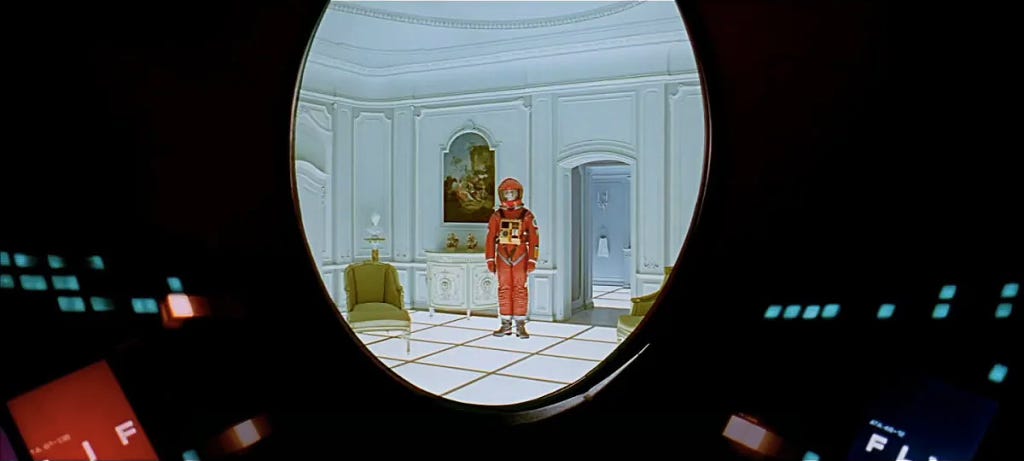
Kubrick’s monumental sci-fi epic uses the power of pure cinema to cover immense territory, explaining why it remains one of the most influential films ever made. The dialogue-free “Dawn of Man” sequence alone supplies material for entire seminars on consciousness, technological progress, violence, and cosmic mystery. Kubrick’s signature blend of mesmerizing photography and music reaches its transcendental zenith here. AI companion HAL’s calm transformation into a disembodied villain that views humans as the weak link, unfortunately no longer feels like fiction.
THX 1138 (1971), USA, George Lucas
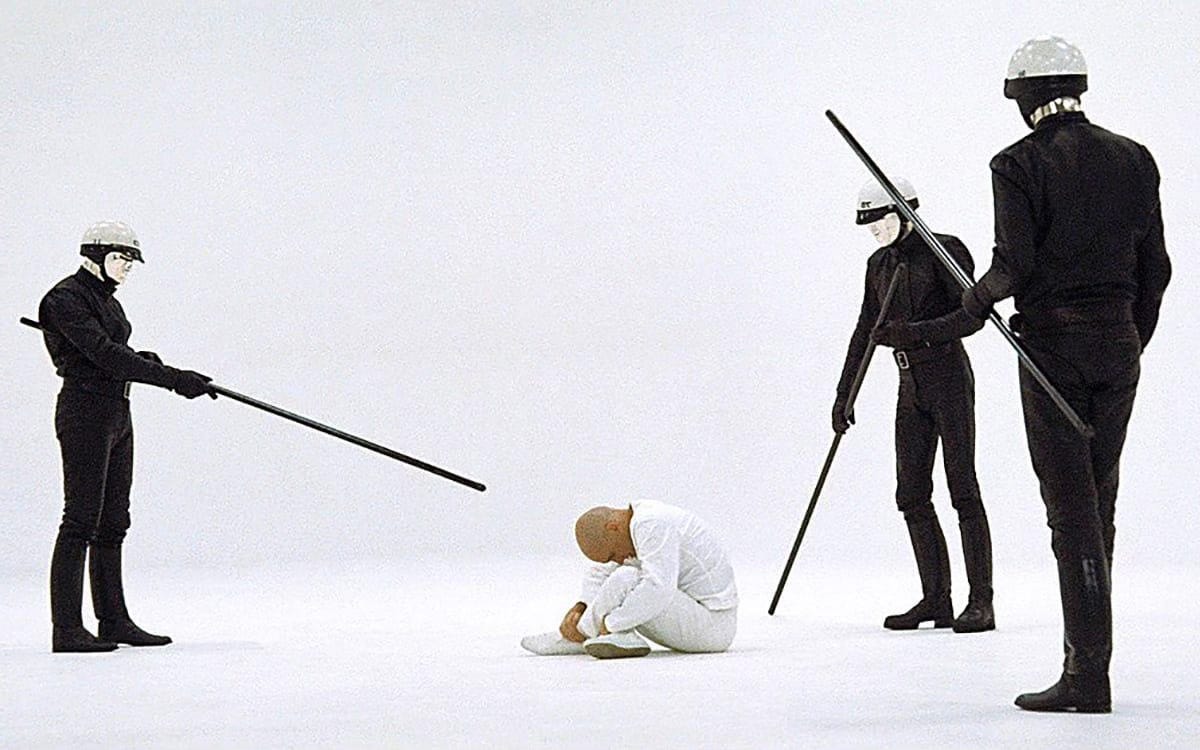
I only discovered this pre-Star Wars minimalist gem by George Lucas while studying the New Hollywood period in college. The film’s bare-bones art-house style and bleak dystopian vision reimagine Plato’s Allegory of the Cave inside a robotic future. Budget limits sparked remarkable creativity, producing a coherent underground world without ever showing the Earth’s surface. You can imagine what happened above ground that resulted in life moving down under. Huxley’s Brave New World certainly shows its influence. When synthetic life becomes self-conscious and awakens to its own artificiality, it’s usually the nonconformists that act in the most human way.
Solaris x2 (1972 / 2002) Soviet Union, Andreij Tarkovsky / USA, Steven Soderbergh
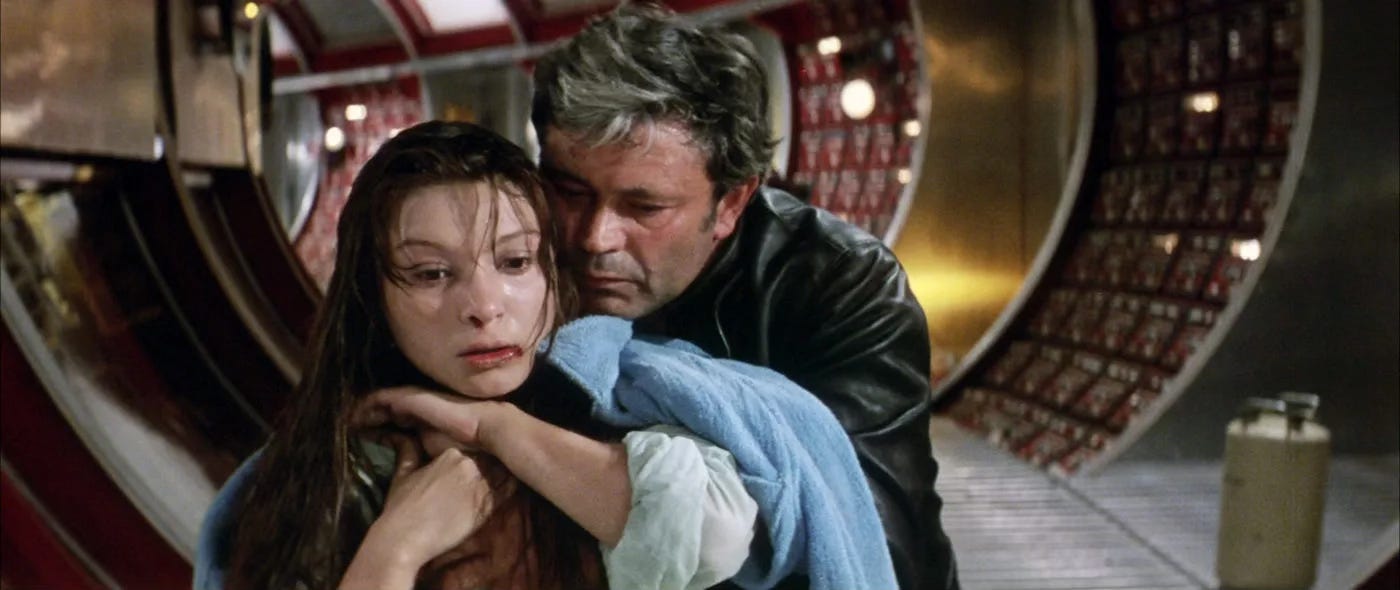

The first of two adaptations of Stanisław Lem’s novels in this series. Tarkovsky’s meditative Russian epic is often favored by purists; Soderbergh’s sleek Hollywood remake appeared thirty years later and features some crowd pleasing faces. Both treat outer space as a mirror for inner consciousness, showing how the mind’s tricks have no limits. A theme picked up again by Japanese anime director Satoshi Kon. Long before simulated worlds became commonplace, Solaris asked: what if the illusion becomes more desirable than real life? In a way, Tarkovsky’s space frontier picks up where Kubrick’s 2001 left off and pushes deeper into existential terrain.
World on a Wire (Welt am Draht, 1973), West Germany, Rainer Werner Fassbinder
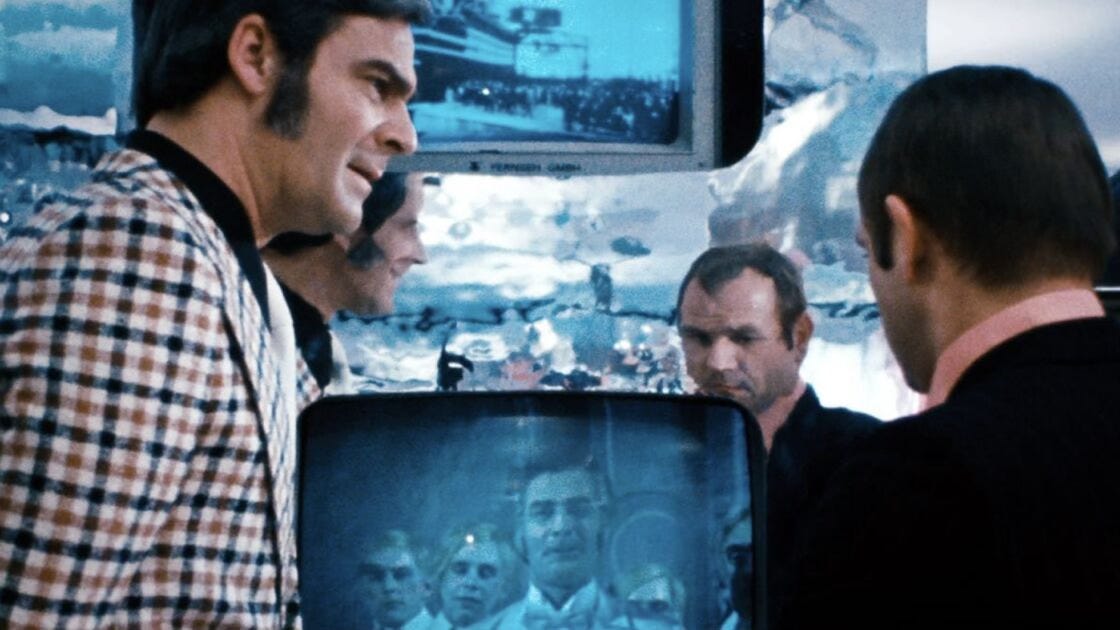
Based on the same novel (Simulacron-3 by Daniel F. Galouye) that later inspired The Matrix, this 1973 film, which premiered on German TV when there were only two public channels available, already explored simulated worlds inside worlds. When Descartes meets Baudrillard in the framework of Zeno’s paradox, the diegetic world is bound to be disorienting. Fassbinder’s only sci-fi film deploys no special effects, but the rising 1970s malls, offices and suburbs and its modernist architecture, shot on location on the outskirts of Paris, are sufficient to feel alienating. Through excessive use of mirrors, screens, grid structures, disorienting long takes and innovative sound design the film feels retro-futuristic today. Cinematographer Michael Ballhaus’ precise framing makes every reflection question reality itself. The witty script, rhythmic editing and alienating sound design keep driving the narrative into deeper levels. How to define “reality” when we look at ourselves in infinity mirrors?
Soylent Green (1973), USA, Richard Fleischer

Set in a 2022 New York where the environment has collapsed, the class divide in this film feels uncomfortably close to our own trajectory. The rich live in towers that resemble vertical gated communities, and the poor stretch out in horizontal slums as far as the eye can see. In a society in which manufactured scarcity lead to rationed food supplies, Charlton Heston’s murder investigation reveals the hidden truth behind the government’s recycling program. Absurdly entertaining and grimly prophetic.
Blade Runner - The Final Cut (1982), USA, Ridley Scott

I almost left it out, but how could it be missing from this list. Ridley Scott’s adaptation of Philip K. Dick’s Do Androids Dream of Electric Sheep is a timeless classic that enhances the quest for what constitutes consciousness and humanity in a transhumanist future. What our eyes can see is a crucial theme throughout the film, hinting at the instability of reality and identity in alienating futuristic environments. The films drenched dark and neon lit style became a benchmark for sci-fi noir aesthetic. The cast and acting is brilliant, and as we are confronted once more with the question whether artificial beings can have real feelings, the film goes one step further and muses about what happens when Replicants actually replicate. If we become more like machines and machines become more like us, where and how do we draw the line about what constitutes a human being? Does it even matter anymore? Rutger Hauer’s legendary final monologue provides a poetic answer to that question and the origami unicorn towards the end seems to suggest that the artificial life we create, may act with similarly human desires if created in our image. Wishful thinking? Maybe. The original score by Vangelis makes it all transcendental.
WarGames (1983), USA, John Badham
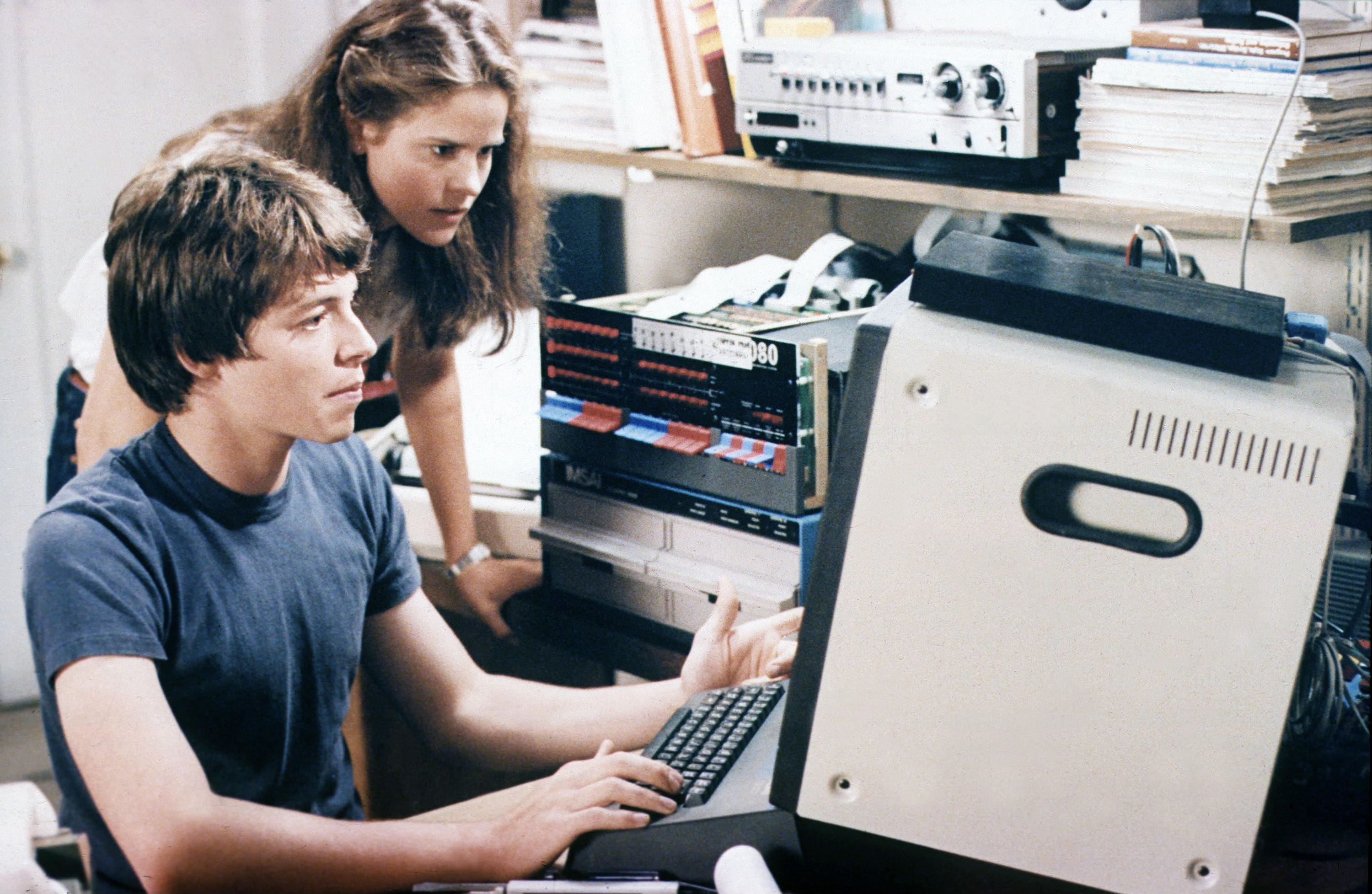
When drones were still science fiction and computers ran on green text, WarGames anticipated the fusion of video games and military tech. What starts as a teen romance quickly escalates into a Dr. Strangelove-style countdown to nuclear annihilation. Though visually and narratively dated, WarGames’ core warning about naively playing with systems we don’t fully understand, has never been more relevant.
The Terminator (1984) / Terminator 2: Judgement Day (1991), USA, James Cameron
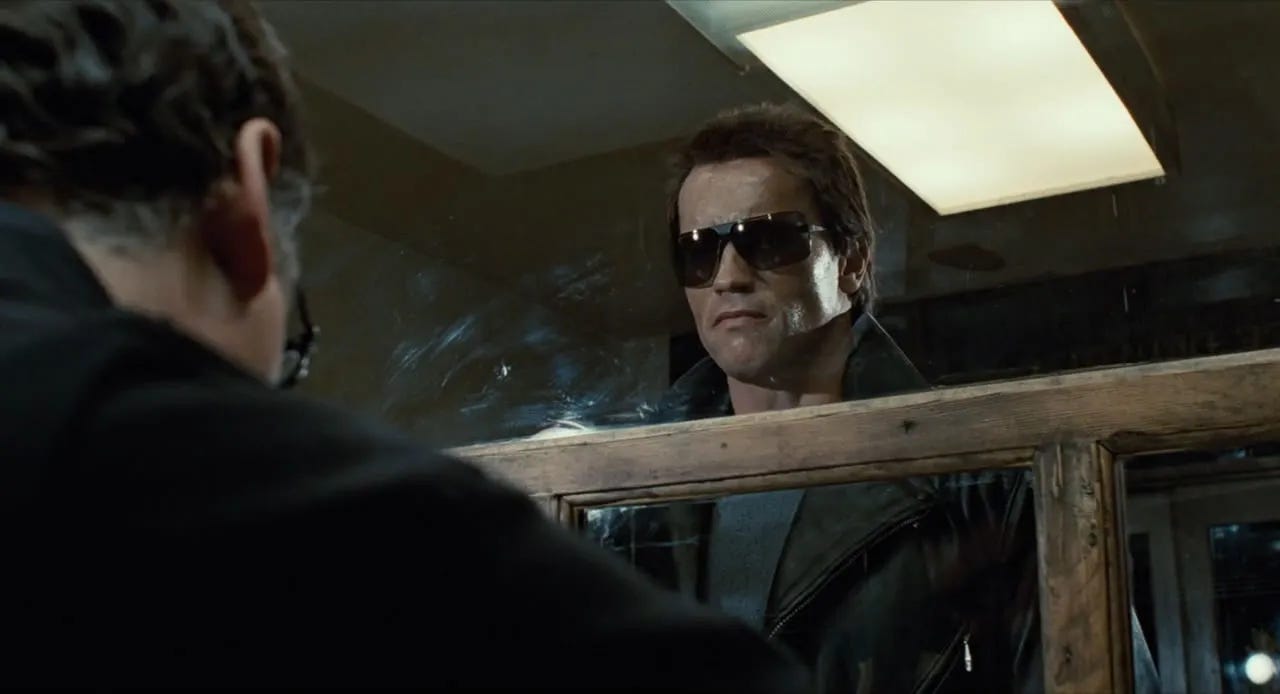

It’s Impossible to leave out these two cult classics for the impact they had not just on Hollywood but also on our collective imagination. Skynet became the ultimate pop culture reference for the AI singularity and the moment when the machines have decided to rid the planet of obsolete humanity. By smartly inserting time travel into the narrative, both films set up a layered storyline in which actions always seem to have consequences across past, present & future simultaneously. The stakes couldn’t be higher as nothing less than the survival of humanity is on the line. We become witness to prime Arnold transforming from the ultimate apathetic killer in The Terminator to empathetic guardian angel in Terminator 2: Judgement Day. The reversal of his characters’ motivation and how we perceive him as a result, from initially fearsome to emotionally attached, is a masterclass of contextual storytelling and character transformation. When Arnie’s seemingly invincible T-800 death robot finds his match in Robert Patrick’s cold blooded rendition of the updated liquid metal T-1000, we are in for a ride of ultimate Hollywood action cinema that not only delivered some of the most iconic CGI effects and action sequences, but also upped the ante in its delivery of memorable one-liners. Unmatched to this day in my humble opinion.
RoboCop (1987) / Total Recall (1990) / Starship Troopers (1997), USA, Paul Verhoeven
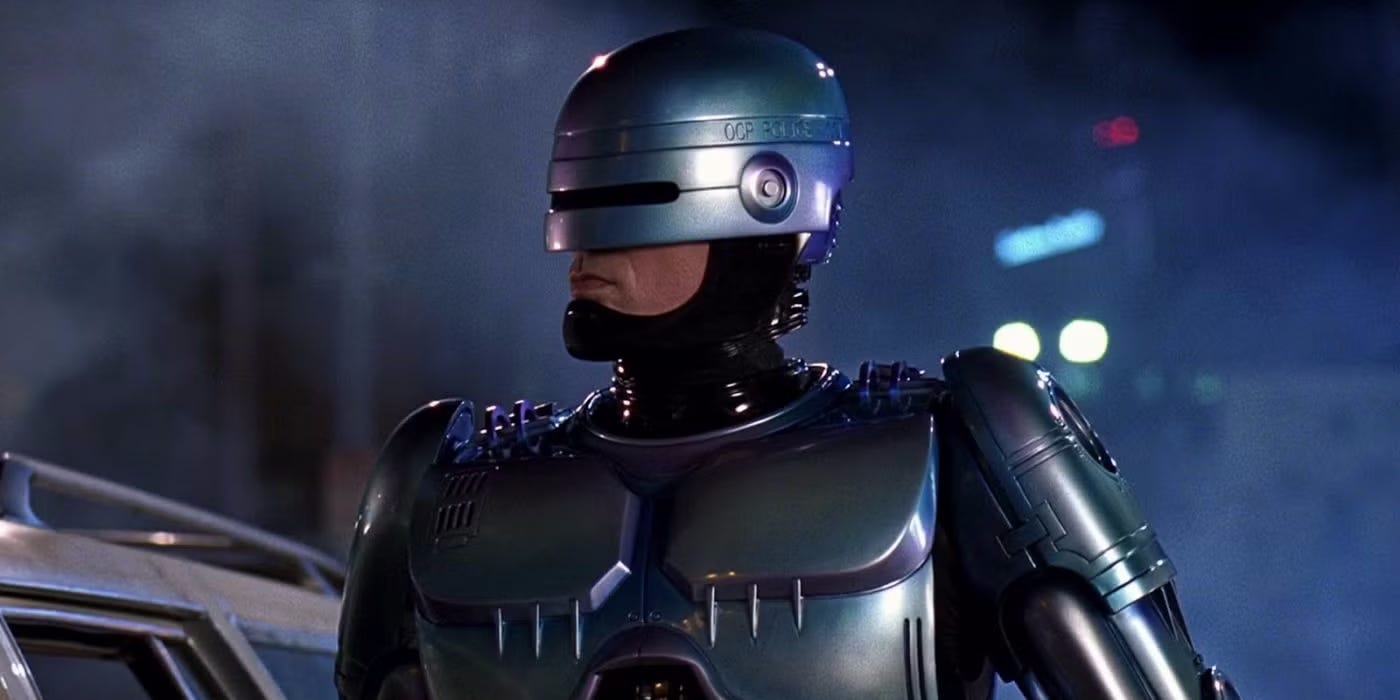
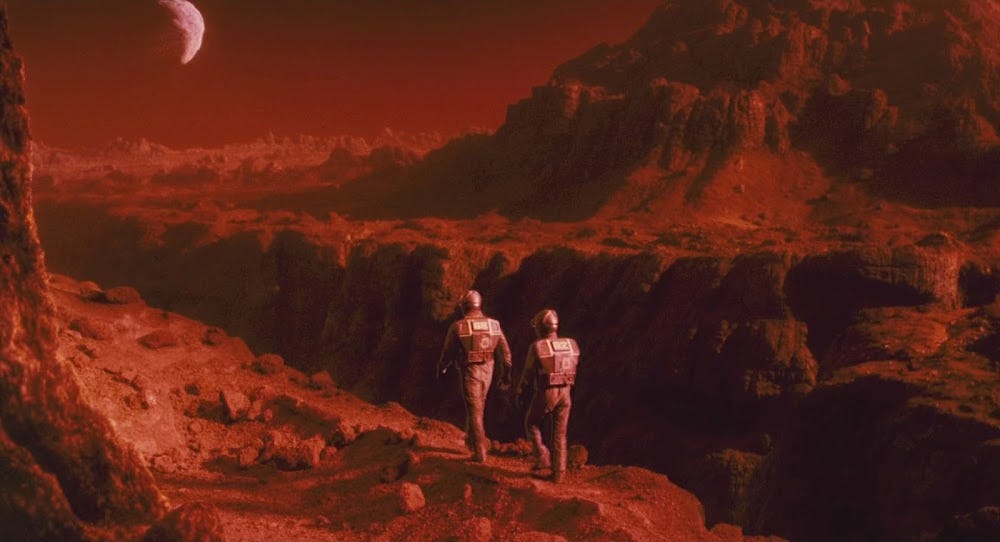
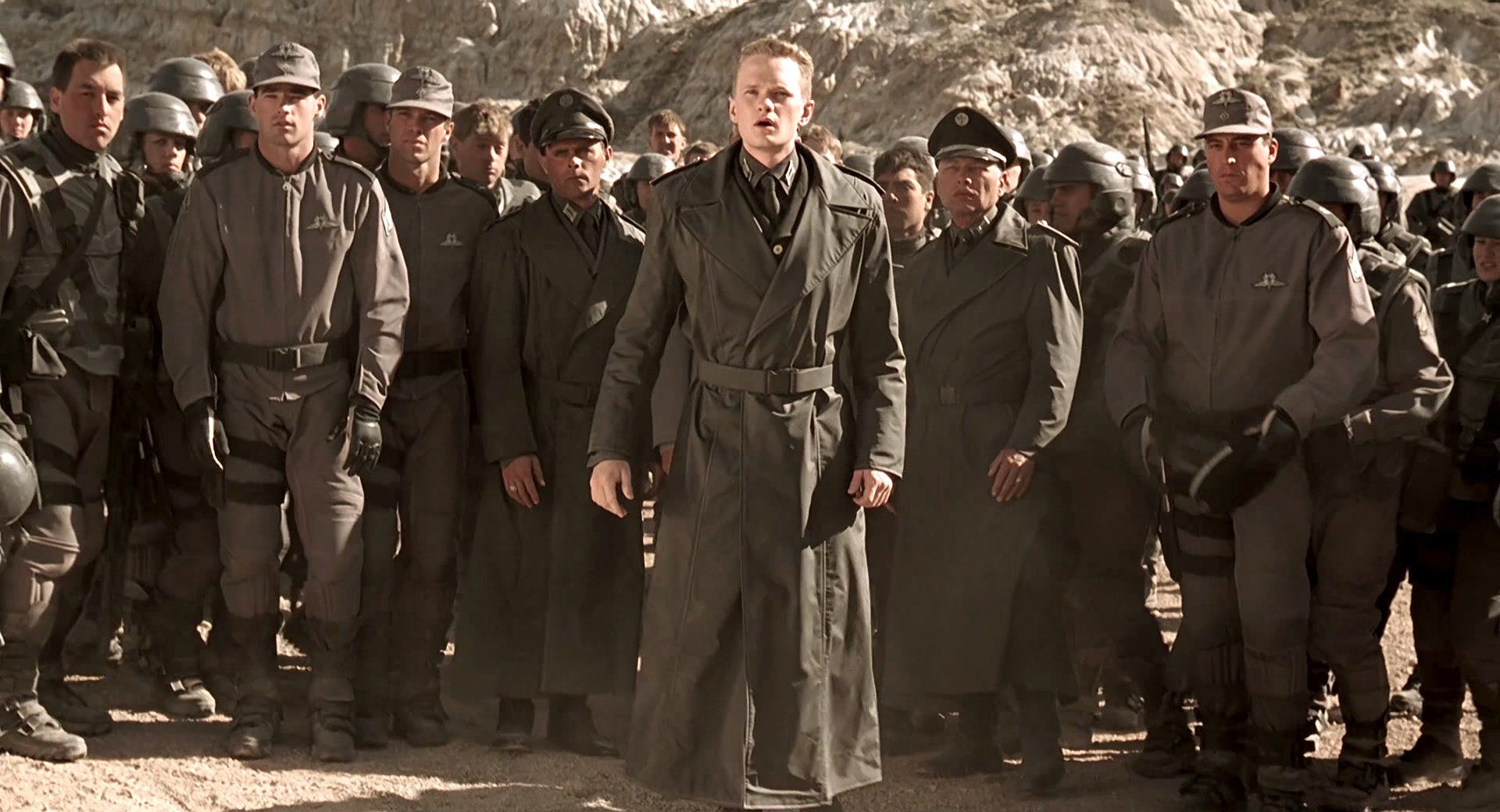
Speaking of one-liners, Paul Verhoeven’s unofficial sci-fi trilogy hides sharp satire inside ridiculous, hyper-violent action blockbusters. Not unlike Grand Theft Auto in live action, the films are over-the-top, gory, masculine, and self-mocking while skewering American obsessions with policing, memory, and militarism. Kinda genius if you ask me. The cyborg cop in RoboCop feels less far-fetched in today’s era of militarized police. In Total Recall we can see a cartoonish vision of memory-blurring virtual worlds on an existing Mars colony, including its own red pill moment (shot on location in Mexico City). And in Starship Troopers we witness space colonization and authoritarian propaganda, with video-gamey combat and gore that still resonates in the new Dune franchise. Or could it be an allegory on xenophobia? Muscle or brains, who’s calling the shots?
Gattaca (1997), USA, Andrew Niccol

In a future where eugenics rule and genetically modified selection became standard, professional and private dispositions are determined by the genetic sequence you’ve been equipped with. In this setting, upward mobility of any kind in society amounts to nothing more than a pipe dream. Either you’re valid for the job, or the wife for that matter, or not. The problem is worse if you’re a natural born—without any prenatal genetical modifications—such as protagonist Vincent Freeman (Ethan Hawke), who, though perfectly normal to today’s standards, counts as somewhat retarded in comparison to his genetically modified younger brother. At least until a fateful swimming outing changes everything. While working as a cleaner at a space travel corporation some years later, he gets the chance to change his genetic identity to become valid for his dream job…
Pi (1998), USA, Darren Aronofsky

Darren Aronofsky’s debut film fuses mathematics, Kabbalah numerology, and madness in stark black-and-white. A computer genius and hermit haunted by migraines is obsessed to find a universal pattern in the number of Pi. His custom supercomputer in his crammed NY apartment, could either unlock, or destroy—everything. The film captures the razor thin edge between genius and madness in the dawning digital age. And of course New York is just the right setting for it.
The Matrix Trilogy (1999–2003), USA, The Wachowskis
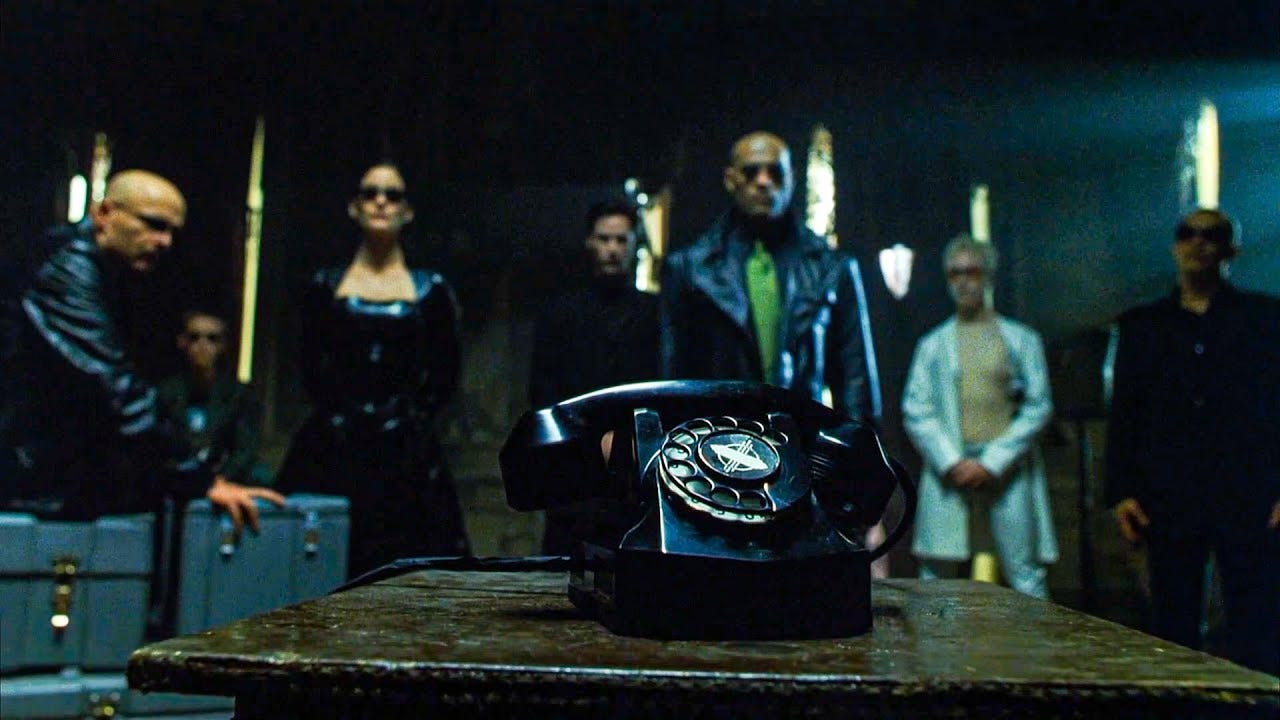
Inspired by the same novel as Fassbinders’s World on a Wire, 26 years earlier, The Matrix arrived at the perfect Y2K moment, delivering philosophy, groundbreaking effects, and iconic postmodern style that constituted a phenomenon. “Red pilled” entered everyday language “as seeing through the simulation” at this point; Keanu became legendary and transformed into John Wick in the years that followed. The sequels may lack the original’s perfection but they complete the story and enhance the “Matrix Universe.” Unfortunately the newest rendition Resurrections (2021) is forgettable.
Teknolust (2002), USA, Lynn Hershman Leeson

The concept of self-cloning doppelgängers and the compartmentalization of the self across virtual domains is genuinely fascinating. Tilda Swinton plays multiple roles with her usual commitment, yet the filmic execution and acting feels a bit cheap throughout. Best to approach this experience like meditation: open your mind! Lynn Hershman Leeson pushes ideas into wild, ridiculous territory. Is it worth the full runtime? Debatable—but some questions linger.
Minority Report (2002), USA, Steven Spielberg
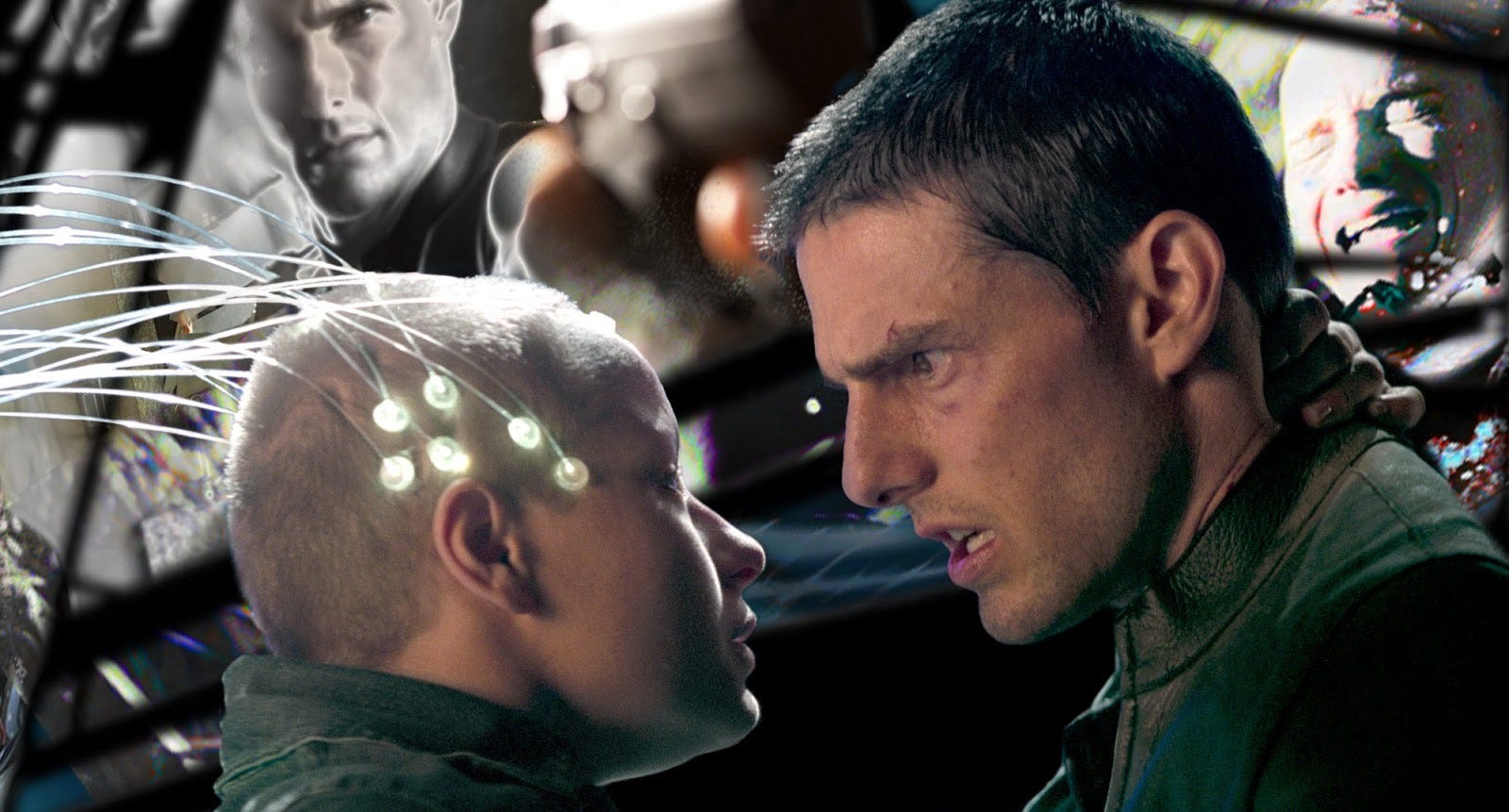
The third Philip K. Dick adaptation in this series just shows what a visionary science-fiction writer he was. The short novella The Minority Report was originally published in the sci-fi magazine Fantastic Universe in 1956 (!). In todays time of Palantir’s all seeing eye readily available for police and military deployment, the idea of Precrime—a neologism for “preventive crime” that Philip K. Dick coined—doesn’t seem so far fetched anymore. How does the tech work? In the film, one female and two male twins with super cognitive abilities are held in a water tank (for cooling purposes?) and hooked to a super computer AI system that the police uses to prevent murder before it happens. When all three so called precogs provide overlapping visions of the future crime, a majority report is produced, and the head of the precrime unit John Anderton (Tom Cruise) becomes active to save the day. While it seems that the system has been running successfully for quite some time, things start to change when DOJ agent Danny Witwer (Colin Farrell) shows up to audit the unit…
The Congress (2013), Israel/France/Germany/Poland, Ari Folman

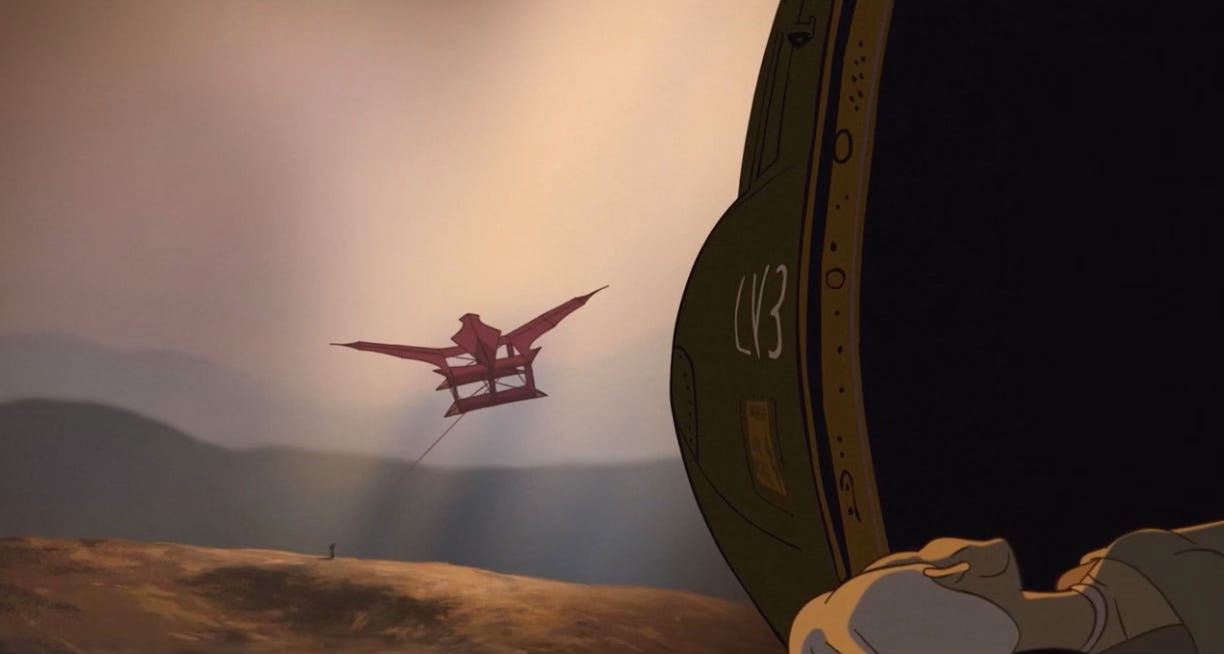
As we circle through the decades, we move through recurring themes: Reminiscient of La Jetée, themes of immortality, invincibility, and boundless imagination await in animated virtual realms in The Congress, based on the novel The Futurist Congress by Stanislaw Lem. Enhanced consciousness, drugs, control, and pure fantasy may finally make the virtual experience preferable to the dull real world. Featuring Robin Wright playing herself as an aging actress, the film critiques Hollywood, fame, and our growing willingness to trade authentic life for modulated perfection in a trippy hybrid of live-action cinema and animation.
Selection List:
Metropolis (1927) / Frau im Mond (1929) (Germany, Fritz Lang) (runtime varies) Cast: Brigitte Helm, Gustav Fröhlich, Alfred Abel (Metropolis); Willy Fritsch, Gerda Maurus, Fritz Rasp (Frau im Mond)
La Jetée (1962) (France, Chris Marker) (28 min) Cast: Jean Négroni, Hélène Châtelain, Davos Hanich
2001: A Space Odyssey (1968) (UK/USA, Stanley Kubrick) (139 min) Cast: Keir Dullea, Gary Lockwood, Douglas Rain (voice of HAL 9000)
THX 1138 (1971) (USA, George Lucas) (88 min) Cast: Robert Duvall, Donald Pleasence, Maggie McOmie
Solaris (1972 / 2002) (Soviet Union, Andrei Tarkovsky / USA, Steven Soderbergh) (166 min / 99 min) Cast: Donatas Banionis, Natalya Bondarchuk (1972); George Clooney, Natascha McElhone (2002)
World on a Wire (Welt am Draht, 1973) (West Germany, Rainer Werner Fassbinder) (206 min) Cast: Klaus Löwitsch, Barbara Lass, Mascha Rabben
Soylent Green (1973) (USA, Richard Fleischer) (97 min) Cast: Charlton Heston, Edward G. Robinson, Leigh Taylor-Young
Blade Runner (1982) (USA, Ridley Scott) (117 min) Cast: Harrison Ford, Rutger Hauer, Sean Young, Daryl Hannah
WarGames (1983) (USA, John Badham) (114 min) Cast: Matthew Broderick, Ally Sheedy, Dabney Coleman
The Terminator (1984) / Terminator 2: Judgment Day (1991) (USA, James Cameron) (107 min / 137 min) Cast: Arnold Schwarzenegger, Linda Hamilton, Michael Biehn (1984); Arnold Schwarzenegger, Linda Hamilton, Edward Furlong, Robert Patrick (1991)
RoboCop (1987) / Total Recall (1990) / Starship Troopers (1997) (USA, Paul Verhoeven) (runtime varies) Cast: Peter Weller, Nancy Allen (RoboCop); Arnold Schwarzenegger, Rachel Ticotin, Sharon Stone (Total Recall); Casper Van Dien, Denise Richards, Neil Patrick Harris (Starship Troopers)
Gattaca (1997) (USA, Andrew Niccol) (106 min) Cast: Ethan Hawke, Uma Thurman, Jude Law, Gore Vidal
Pi (1998) (USA, Darren Aronofsky) (84 min) Cast: Sean Gullette, Mark Margolis, Ben Shenkman
The Matrix Trilogy (1999–2003) (USA, The Wachowskis) (runtime varies) Cast: Keanu Reeves, Laurence Fishburne, Carrie-Anne Moss
Teknolust (2002) (USA, Lynn Hershman Leeson) (85 min) Cast: Tilda Swinton
Minority Report (2002) (USA, Steven Spielberg) (145 min) Cast: Tom Cruise, Colin Farrell, Samantha Morton, Max von Sydow
The Congress (2013) (Israel/France/Germany/Poland, Ari Folman) (122 min) Cast: Robin Wright, Harvey Keitel, Kodi Smit-McPhee
Thanks for sharing! Hope you enjoy. Have a great weekend